

Choosing an engagement ring is about more than finding a beautiful stone. For many couples, the gemstone also becomes part of the story the ring tells—through its color, birthstone connection, historical symbolism, personal meaning, and suitability for everyday wear.
Colored gemstone engagement rings offer an alternative to traditional diamond engagement rings, with choices ranging from highly durable ruby and sapphire to romantic emerald, calming aquamarine, vibrant garnet, and one-of-a-kind opal.
Quick answer: If everyday durability is your highest priority, ruby and sapphire are among the strongest colored gemstone choices for an engagement ring. Aquamarine is another durable option, while emerald, amethyst, garnet, citrine, blue topaz, and peridot require varying degrees of care. Opal can make a beautiful and distinctive engagement ring, but it needs significantly more protection from scratches, impacts, heat, and sudden temperature changes.
About gemstone meanings: The symbolism discussed in this guide reflects historical, cultural, birthstone, and modern jewelry traditions. Meanings can vary between cultures and periods. Gemstones should not be understood as scientifically proven to create love, healing, protection, confidence, relationship success, or other personal outcomes.
Can You Have a Gemstone Engagement Ring?
Yes. A colored gemstone can make an excellent engagement-ring center stone. The right choice depends on more than symbolism, however. Consider the gemstone's durability, your lifestyle, how often the ring will be worn, the setting, maintenance requirements, treatment history, budget, and—most importantly—your personal preferences.
A person with an active lifestyle may prefer a highly durable sapphire or ruby, while someone comfortable giving their jewelry additional care may happily choose emerald, amethyst, peridot, or opal.
There is no rule that an engagement ring must feature a diamond. A colored gemstone can be chosen because it represents a birth month, a favorite color, a shared memory, a family tradition, or simply because its appearance feels more personal.
If you are still deciding which qualities matter most, see our separate guide on how to choose the perfect colored gemstone for an engagement ring.
What Makes a Good Gemstone for an Engagement Ring?

An engagement ring may be worn thousands of times over many years. That makes practical suitability just as important as beauty.
Hardness
Toughness
Stability
Setting
Lifestyle
Treatment and Disclosure
The Mohs scale measures a mineral's relative resistance to scratching. A higher number generally provides better resistance to everyday abrasion, but hardness alone does not tell the complete durability story.
Toughness describes a gemstone's resistance to chipping or breaking when struck. A stone can have relatively high hardness and still be vulnerable to a strong blow because of fractures or cleavage.
Stability refers to how well a gemstone withstands factors such as heat, light, chemicals, humidity, and temperature changes.
A protective setting can make a meaningful difference. Bezels, halos, lower-profile designs, and settings that protect exposed edges can be useful for gemstones that need extra care.
Someone who frequently works with their hands, exercises with jewelry on, works around tools, or regularly exposes their hands to hard surfaces should prioritize durability—or develop the habit of removing the ring during higher-risk activities.
Many colored gemstones can be treated to improve color or clarity. Treatments are common and often accepted within the jewelry industry, but buyers should know what they are purchasing because certain treatments can affect care requirements.

Gemstone Engagement Ring Comparison
|
Important: Mohs hardness measures resistance to scratching, not overall durability. Toughness, stability, treatments, setting design, and the wearer's lifestyle also matter.
What Do Different Gemstones Mean in an Engagement Ring?
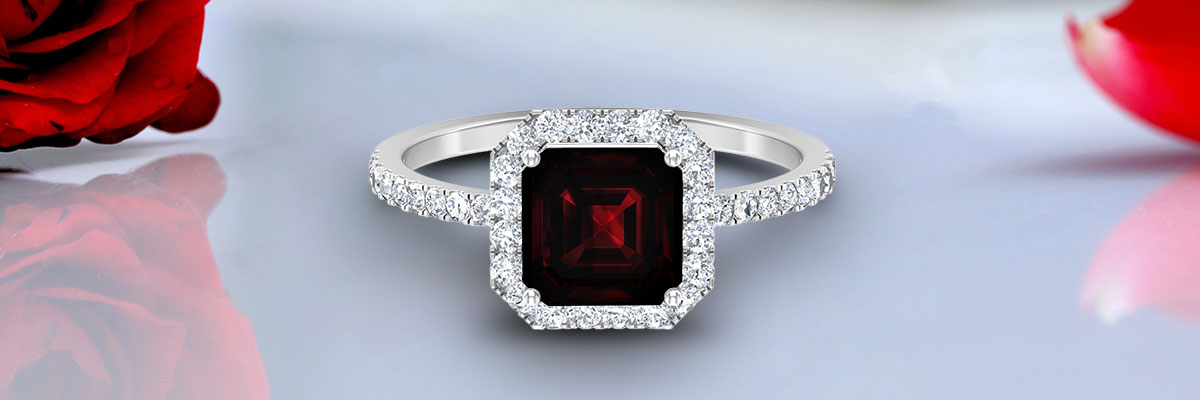
1. Garnet Engagement Ring Meaning
Garnet is a gemstone family available in more colors than the deep red shade many people first associate with it. The name is generally connected with the Latin granatus, meaning seed-like, because some red garnets resemble pomegranate seeds.
What Does Garnet Symbolize in an Engagement Ring?
Traditional meaning: Garnet has long been associated with commitment, affection, friendship, vitality, and passionate love.
That makes a red garnet engagement ring meaningful for a couple who views their relationship as both romantic and deeply rooted in companionship.
Practical suitability: Depending on type, garnet ranges from about 6.5 to 7.5 on the Mohs scale. Garnets have fair-to-good toughness but should still be protected from hard knocks and rough wear.
Best suited to: Someone who loves rich red color and wants a meaningful colored gemstone without automatically choosing ruby.
Engagement-ring tip: A bezel, halo, or another design that provides additional protection can be useful if the ring will be worn frequently.
Explore Garnet Engagement Rings
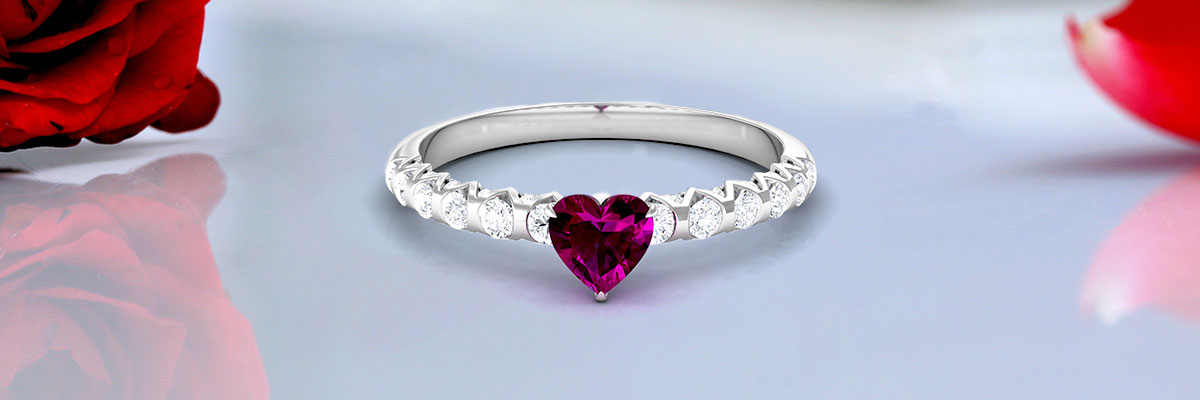
2. Rhodolite Garnet Engagement Ring Meaning
Rhodolite is a variety within the garnet family rather than a completely separate mineral family. It is admired for attractive pinkish-red, raspberry, and purplish-red hues.
What Does Rhodolite Garnet Symbolize?
Traditional and modern symbolism: Rhodolite is often associated with romance, affection, compassion, and commitment. Its softer rose-to-purple coloration can appeal to someone who wants a romantic alternative to deeper red garnet or ruby.
Practical suitability: As part of the garnet family, rhodolite can be suitable for rings when worn with reasonable care. It should still be protected from hard blows and repeated abrasion.
Best suited to: Someone who loves romantic pink-red gemstones but wants something less conventional than ruby.
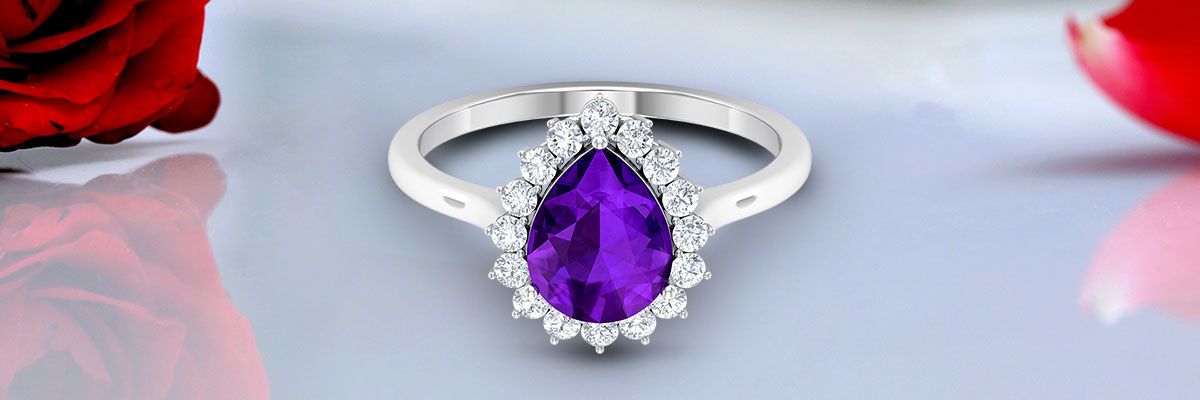
3. Amethyst Engagement Ring Meaning
Amethyst is the purple variety of quartz and the traditional February birthstone. Its name comes from the Greek amethystos, historically associated with the idea of not being intoxicated.
What Does Amethyst Symbolize in an Engagement Ring?
Traditional meaning: Amethyst has been associated with faithfulness, tranquility, sincerity, and devotion. Its February birthstone connection can make it particularly meaningful for February birthdays, anniversaries, or relationships with a personal connection to the month.
Practical suitability: Amethyst ranks 7 on the Mohs scale and has good toughness. It can be worn in rings, although it may show signs of wear over the years and may eventually benefit from repolishing.
Some amethyst can also fade after prolonged exposure to intense light, so it should not be deliberately left in strong sunlight for extended periods.
Best suited to: Someone who loves purple and wants a romantic birthstone-centered engagement ring while accepting a little more maintenance than sapphire or ruby.
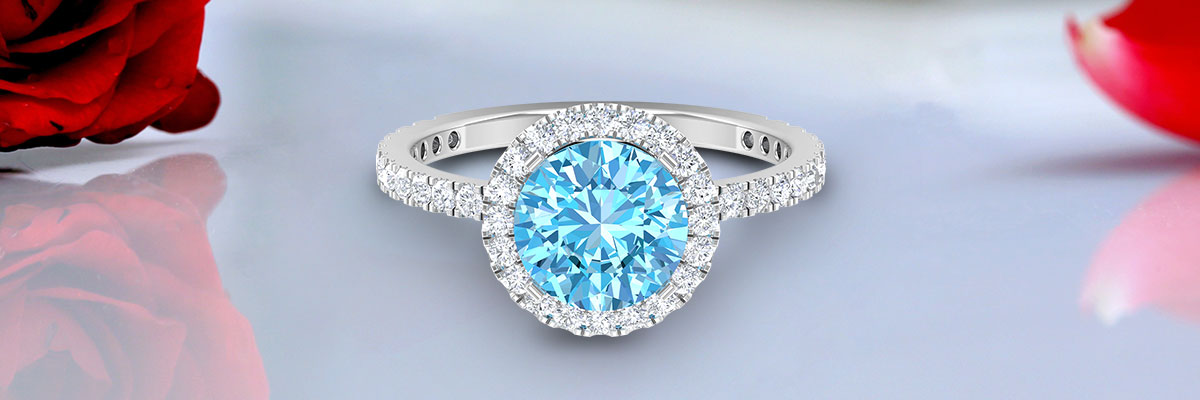
4. Aquamarine Engagement Ring Meaning
Aquamarine gets its name from Latin words associated with seawater, an appropriate reference to its beautiful pale-to-medium blue and blue-green colors.
What Does Aquamarine Symbolize in an Engagement Ring?
Traditional meaning: Aquamarine has been associated with calmness, clarity, communication, harmony, and devotion.
For an engagement ring, that symbolism can represent a relationship built around honest communication and remaining calm together through life's changes.
Practical suitability: Aquamarine ranks 7.5–8 on the Mohs scale and is considered a durable jewelry gemstone when protected from scratches and hard knocks.
Best suited to: Someone who loves soft blue gemstones but wants something different from sapphire.
Explore Aquamarine Engagement Rings
5. Emerald Engagement Ring Meaning
Emerald is one of the world's best-known green gemstones and the traditional May birthstone.
What Does Emerald Symbolize in an Engagement Ring?
Traditional meaning: Emerald has long been connected with renewal, growth, hope, love, and new beginnings. Those associations make it particularly fitting for an engagement, which itself marks the beginning of a new chapter.
Practical suitability: Emerald ranks 7.5–8 on the Mohs scale, but hardness does not tell the whole story. Emeralds commonly contain inclusions and fractures and are often clarity enhanced with oil or resin. They therefore need more care than ruby or sapphire despite their relatively high Mohs rating.
Best suited to: Someone deeply drawn to emerald's distinctive green color and comfortable caring for a gemstone that may require additional attention.
Engagement-ring tip: Consider a protective setting and remove an emerald ring before strenuous work, exercise, or activities where it may receive a hard blow.
Explore Emerald Engagement Rings

6. Ruby Engagement Ring Meaning
Ruby belongs to the corundum mineral family and gets its red color from chromium. Its name is connected to the Latin ruber, meaning red.
What Does Ruby Symbolize in an Engagement Ring?
Traditional meaning: Ruby has centuries of associations with love, passion, vitality, courage, and devotion. Its intense red color makes that romantic symbolism easy to understand.
Practical suitability: Ruby ranks 9 on the Mohs scale and has excellent toughness, making it one of the strongest colored gemstone options for an engagement ring intended for regular wear.
Treatment consideration: Heat treatment is common in the ruby market, while some stones can receive other treatments. Ask the seller for treatment disclosure because certain treatments may influence value and care.
Best suited to: Someone who wants bold red color, strong romantic symbolism, and excellent everyday durability.

7. Peridot Engagement Ring Meaning
Peridot is known for yellowish-green to green hues and is a traditional August birthstone. Its name has been linked to the Arabic faridat, meaning gem.
What Does Peridot Symbolize in an Engagement Ring?
Traditional meaning: Peridot is often associated with renewal, positivity, warmth, compassion, and new beginnings.
Practical suitability: Peridot ranks 6.5–7 on the Mohs scale and has fair-to-good toughness. It can be used in jewelry, but GIA advises that it cannot take hard wear and is not an ideal choice for an unprotected ring that will be subjected to constant rough daily use.
Best suited to: Someone who loves distinctive yellow-green color and is comfortable removing their engagement ring during higher-risk activities.
Engagement-ring tip: A protective setting and careful storage away from harder gemstones are particularly useful for peridot.
Explore Peridot Engagement Rings

8. Blue Sapphire Engagement Ring Meaning
Blue sapphire is the blue variety of corundum and the traditional September birthstone. It is one of the best-known colored gemstones used in engagement rings.
What Does Blue Sapphire Symbolize in an Engagement Ring?
Traditional meaning: Sapphire has long been associated with loyalty, faithfulness, sincerity, wisdom, and commitment—qualities that naturally align with engagement-ring symbolism.
Practical suitability: Sapphire ranks 9 on the Mohs scale, has excellent toughness, and has no cleavage. This combination makes it one of the strongest colored gemstone choices for a ring intended for everyday wear.
Treatment consideration: Heat treatment is common for sapphires. As with other valuable colored gemstones, buyers should ask about any treatments and available documentation.
Best suited to: Someone who wants classic blue color, traditional engagement symbolism, and excellent durability.
Explore Blue Sapphire Engagement Rings

9. Ethiopian Opal Engagement Ring Meaning
Ethiopian Opal is admired for dramatic play-of-color that can display flashes from across the spectrum. Because each opal's pattern can look different, it has particular appeal for someone seeking an individualistic engagement ring.
What Does Opal Symbolize in an Engagement Ring?
Traditional meaning: Opal has been associated with hope, creativity, individuality, imagination, and emotional expression.
Practical suitability: Opal is significantly softer than ruby or sapphire, ranging around 5–6.5 on the Mohs scale. Its toughness ranges from very poor to fair, and high heat or sudden temperature changes can cause damage.
That does not mean an opal can never be used in an engagement ring. It means the wearer should understand that it is a special-care choice rather than one of the most carefree options for rough everyday wear.
Best suited to: Someone who values individuality and play-of-color enough to accept a higher level of care.
Engagement-ring tip: Choose a protective setting, remove the ring for physical work and exercise, and have the setting inspected periodically.

10. Citrine Engagement Ring Meaning
Citrine is the yellow-to-orange variety of quartz and one of the traditional November birthstones.
What Does Citrine Symbolize in an Engagement Ring?
Traditional meaning: Citrine is commonly associated with joy, warmth, optimism, enthusiasm, and positive new beginnings.
Practical suitability: Like amethyst, citrine ranks 7 on the Mohs scale. It is reasonably durable for jewelry but still requires protection from scratching and hard knocks.
Treatment consideration: Natural citrine is comparatively rare. Much of the citrine sold in today's market is produced by heat-treating amethyst, so treatment disclosure is useful when understanding what you are buying.
Best suited to: Someone who loves sunny yellow-to-orange gemstones and wants an engagement ring with cheerful, unconventional character.
Explore Citrine Engagement Rings

11. Blue Topaz Engagement Ring Meaning
Blue topaz occurs in shades commonly described in the trade as Sky Blue, Swiss Blue, and London Blue. Learn about Sky Blue Topaz, Swiss Blue Topaz, and London Blue Topaz.
What Does Blue Topaz Symbolize in an Engagement Ring?
Traditional meaning: Blue topaz is often associated with loyalty, communication, clarity, calmness, and emotional connection.
Practical suitability: Topaz ranks 8 on the Mohs scale, giving it good resistance to scratches. However, topaz has cleavage, so a severe blow, extreme pressure, or sharp temperature change can cause it to break.
Treatment consideration: Much of the blue topaz in the market begins as colorless topaz and receives irradiation followed by heat treatment to produce blue color. These treatments are established within the gem trade, but buyers should still receive appropriate disclosure.
Best suited to: Someone who wants vivid blue color and good hardness at a typically more accessible price point than fine sapphire.
Explore London Blue Topaz Engagement Rings

Which Colored Gemstone Is Best for an Engagement Ring?
There is no single best gemstone for every couple. The right answer depends on your priorities.
|
Before deciding, also consider the person's existing jewelry, preferred metal color, occupation, activity level, willingness to remove the ring during higher-risk activities, and whether the ring's symbolic meaning actually matters to them.
Should You Ask About Gemstone Treatments?

Yes. Treatments are common in the colored gemstone market and are not automatically a reason to reject a gemstone. What matters is transparency.
Ask the jeweler:
- Is the gemstone natural or laboratory-grown?
- Has it received any known treatment?
- Is that treatment permanent or does it require special care?
- Does the treatment materially affect value?
- Is independent laboratory documentation available or appropriate for this gemstone?
Examples include heat treatment in ruby and sapphire, clarity enhancement in many emeralds, irradiation and heat treatment used for much commercial blue topaz, and heat treatment responsible for much of the citrine available in the market.
A trustworthy seller should be willing to explain material gemstone information rather than presenting all colored stones as though they are identical.
Which Ring Settings Are Best for Colored Gemstones?

Bezel Settings
Halo Settings
Prong Settings
Lower-Profile Designs
The ideal setting depends on the gemstone and the wearer's lifestyle.
A bezel surrounds much or all of a gemstone's edge with metal. It can provide useful edge protection for someone who leads an active lifestyle.
A halo creates a border of smaller stones around the center gemstone and may provide some additional protection while also emphasizing the center stone visually.
Prongs allow more of the gemstone to remain visible, but exposed edges and corners can be more vulnerable. Prongs should be checked periodically for wear or looseness.
A center stone that sits closer to the finger may be less likely to catch on clothing or objects than a very high-set stone.
Whatever setting you choose, remove fine jewelry before heavy lifting, workouts, gardening, household cleaning, or other situations where an engagement ring can receive a forceful impact.
Should Meaning or Durability Matter More?
For an engagement ring, neither has to completely replace the other.
If a gemstone has deep personal significance but needs more care, you can choose a protective setting and adjust how you wear it. If you want a ring that can handle frequent daily wear with fewer concerns, ruby and sapphire offer an especially strong balance of color, meaning, and durability.
The best engagement ring is ultimately one whose appearance, practical requirements, budget, and personal meaning all make sense for the person who will wear it.
Design a Ring That Feels Like Your Story
Our gemstone engagement rings are handcrafted with care, set with certified gemstones, and ethically sourced to help you celebrate your love with confidence.
FAQs About Gemstone Engagement Rings
What is the best colored gemstone for an engagement ring?
What is the most durable colored gemstone for an engagement ring?
Which gemstone symbolizes love?
Which gemstone symbolizes loyalty?
Can amethyst be used for an engagement ring?
Is emerald good for an everyday engagement ring?
Is opal too delicate for an engagement ring?
Is peridot suitable for an engagement ring?
Are blue topaz engagement rings durable?
Are gemstone meanings scientifically proven?
Should I choose a birthstone for an engagement ring?
Do colored engagement gemstones need certificates?
Ruby and sapphire are among the strongest colored gemstone choices for everyday engagement rings because both rank 9 on the Mohs scale and have excellent toughness. The best choice for an individual can still depend on color preference, lifestyle, budget, symbolism, and willingness to provide additional care.
Among the gemstones discussed in this guide, ruby and sapphire offer the strongest combination of scratch resistance and toughness. Both belong to the corundum family and rank 9 on the Mohs hardness scale.
Many gemstones carry romantic symbolism. Ruby is traditionally associated with passion and romantic love, garnet with commitment and affection, emerald with growth and renewal, and sapphire with loyalty and faithfulness. These are symbolic traditions rather than scientifically proven effects.
Blue sapphire has particularly strong traditional associations with loyalty, sincerity, and faithfulness, making those meanings one reason it has remained popular in engagement jewelry.
Yes. Amethyst ranks 7 on the Mohs scale and has good toughness, so it can be used in a ring with proper care. It is more likely than sapphire or ruby to show wear over the years and may eventually require repolishing.
Emerald can be worn in an engagement ring, but it requires more care than ruby or sapphire. Although emerald ranks 7.5–8 on the Mohs scale, inclusions, fractures, and common clarity treatments can make it more vulnerable to hard knocks.
Opal is not automatically unsuitable, but it is a special-care choice. With a Mohs hardness of roughly 5–6.5 and relatively low toughness, an opal engagement ring needs more protection from scratches, impacts, high heat, and sudden temperature changes than many other gemstone options.
Peridot can be set in an engagement ring, but it is best for someone prepared to wear it carefully. At 6.5–7 on the Mohs scale, it is more vulnerable to scratching and hard wear than sapphire, ruby, or aquamarine.
Blue topaz has good scratch resistance at Mohs 8, but its cleavage means a hard blow or extreme pressure can still cause damage. A protective setting and sensible wearing habits are recommended.
No. Meanings such as loyalty, passion, calmness, hope, and renewal come from historical, cultural, birthstone, spiritual, or modern jewelry traditions. They should be understood as symbolism rather than scientifically proven personal effects.
You can. A birthstone can give an engagement ring additional personal meaning, but durability should still be considered. A sapphire birthstone ring, for example, can handle regular wear more easily than an opal or peridot ring.
Not every gemstone requires a laboratory report, particularly when the report cost would be disproportionate to the gemstone's value. For higher-value stones, unusual treatments, or purchases where origin or treatment status materially affects value, independent laboratory documentation can provide useful information.
Final Takeaway
A colored gemstone engagement ring should be more than a beautiful color or an appealing legend. The strongest choice brings together personal meaning, practical durability, transparent gemstone information, an appropriate setting, and the wearer's lifestyle.
If you want maximum durability from a colored center stone, ruby and sapphire are compelling options. Aquamarine offers impressive durability with a softer blue appearance. Emerald provides unmistakable green beauty but deserves extra care. Amethyst, garnet, rhodolite, citrine, and blue topaz can all make distinctive engagement rings when their care needs are understood. Peridot requires a more careful wearer, while opal is best approached as a beautiful special-care option.
Most importantly, choose a gemstone because its appearance and story feel right for your relationship—not because a stone is claimed to guarantee a particular emotional or spiritual outcome.
Ready to compare stones in more detail? Read our guide on how to choose the perfect colored gemstone for your engagement ring, explore gemstone engagement rings, or learn more about the broader meaning of gemstone colors.
Editorial note: Gemological durability, treatment, and care information in this guide was reviewed against guidance from the Gemological Institute of America (GIA). Gemstone symbolism is presented as historical, cultural, birthstone, or modern jewelry tradition rather than scientifically proven personal effects.
Sources
Gemological Institute of America (GIA): Colored Gemstone Engagement Rings Buying Guide
GIA: Sapphire Care and Cleaning
GIA: Emerald Care and Cleaning
GIA: Aquamarine Care and Cleaning
GIA: Amethyst Care and Cleaning
GIA: Garnet Care and Cleaning
GIA: Peridot Care and Cleaning
GIA: Opal Care and Cleaning
GIA: Topaz Gemstone Information
GIA: Citrine Gemstone Information